
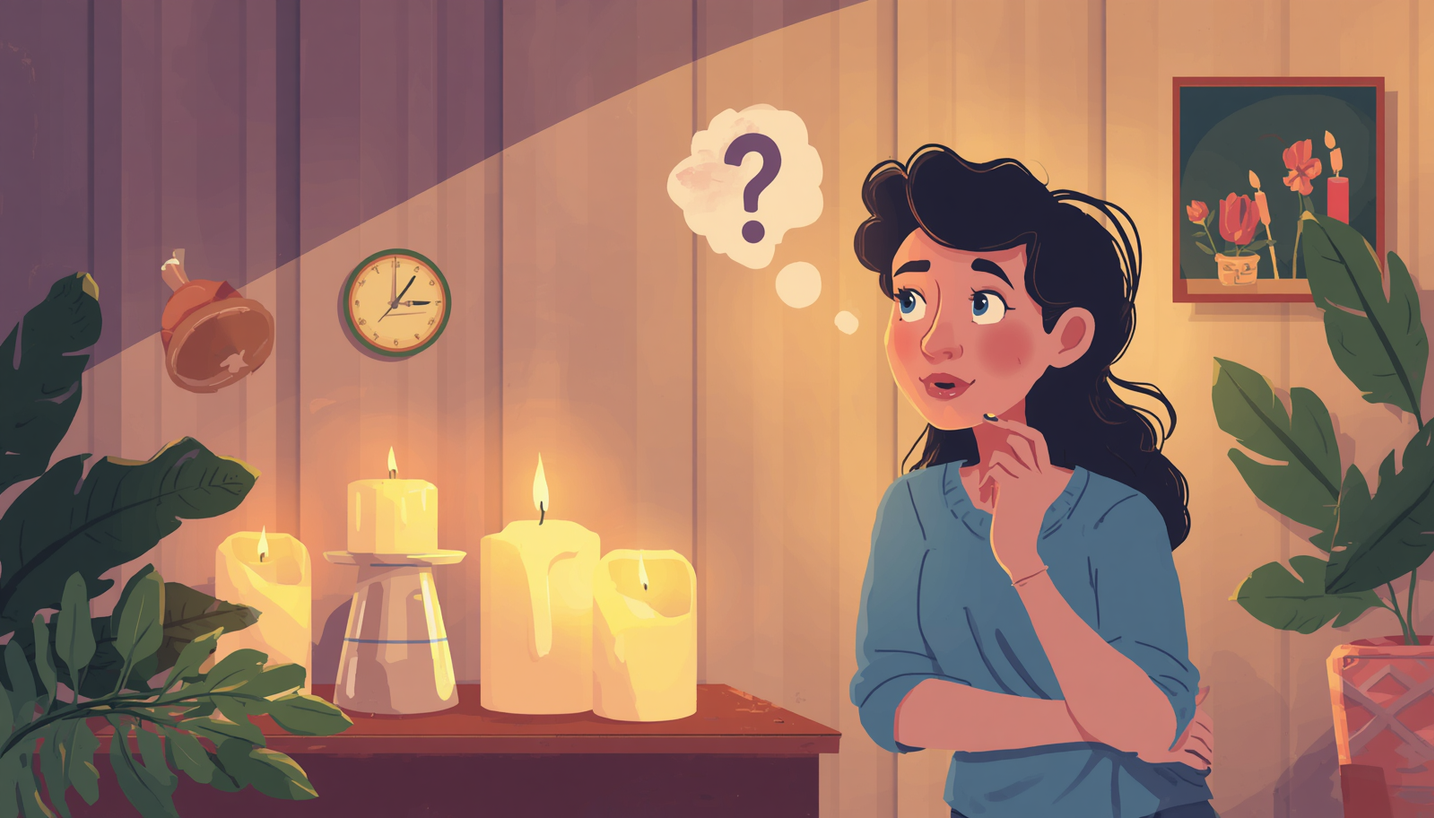
If you've ever left a candle store with a tickle in your throat, you're not imagining things. A lot of people who love the idea of a scented home end up avoiding candles altogether because certain ones leave them coughing, sneezing, or reaching for an inhaler. The good news: the candle itself usually isn't the problem. What it's made of is.
Why some candles trigger symptoms
Most of the irritation people associate with candles comes down to three things:
- Paraffin wax. Paraffin is a petroleum byproduct, and burning it releases trace amounts of soot and compounds like toluene and benzene into the air. For most people that's a minor annoyance. For anyone with asthma or sensitive airways, it can be enough to set off a reaction.
- Synthetic fragrance oils. Cheaper fragrance blends often rely on phthalates and other synthetic carriers to make scent throw stronger. These are common triggers for headaches, sinus irritation, and allergy like symptoms.
- Lead or metal core wicks. Older or lower quality candles sometimes use metal core wicks that release trace particulates as they burn. Most reputable brands have phased these out, but it's still worth checking.
What tends to be gentler
None of this means candles are off limits. It usually just means being a little more selective about what's in them:
- Soy wax burns cleaner than paraffin, with less soot and fewer airborne byproducts.
- Phthalate free fragrance oils, or fragrance blended with essential oils, tend to be better tolerated.
- Cotton wicks avoid the metal-core issue entirely.
- Lighter scent concentrations a candle doesn't have to be overpowering to fill a room. Rooms with good airflow also make a real difference.
If you're candle-curious but cautious, a good rule of thumb is to start with a small size in a well-ventilated room and see how you feel after 20–30 minutes of burning. Everyone's sensitivity is different, and that's a low-risk way to test it.
A quick note
This isn't medical advice if you have diagnosed asthma or a fragrance allergy, it's worth talking to your doctor or allergist about what's safe for your specific situation. But for a lot of people, the difference between "candles make me miserable" and "candles are fine" simply comes down to switching from paraffin and synthetic fragrance to cleaner burning soy with better sourced scent oils.
That's exactly why we make ours the way we do hand poured soy, phthalate free fragrance, cotton wicks, no shortcuts. If you've been avoiding candles because of how they made you feel in the past, it might be worth giving them one more try.